- Not to be confused with Affection, a mechanic in the Generation VI and Generation VII core games similarly centered around a Pokémon's bond with its trainer.
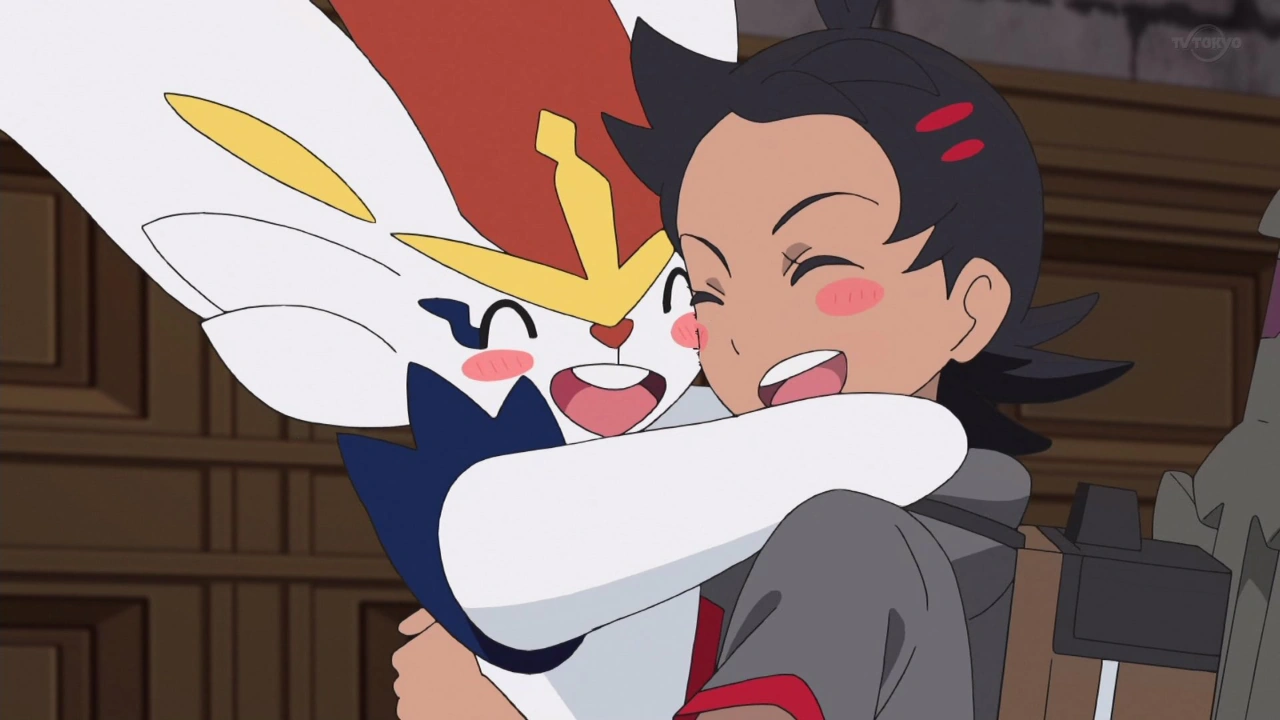
Goh and his Cinderance hugging each other as seen in Pokémon the Series, an example of the important bonding and affection between Pokémon Trainers and their Pokémon in the franchise.
Friendship (also known as Happiness) is a mechanic of measuring how attached a Pokémon is to its Pokémon Trainer and is an essential theme of the overall franchise.
Description
Friendship is how much an individual Pokémon likes its Trainer. It can be gained by taking good care of them, such as keeping them in the player's party, walking a certain amount of steps, gaining levels by winning battles, grooming, using certain items and healing the Pokémon. The higher the friendship, the more the Pokémon likes the Trainer and in some cases, earn bonuses to gain an advantage during battles. Friendship can decrease if they faint often or using bitter herbal medicines. Certain Pokémon also only evolve when they gain a close bond with their Trainers. All Pokémon throughout every generation, no matter their own disposition, can reach high friendship (although strong Pokémon, Legendary and Mythical Pokémon, and, for unknown reasons, Buneary, are more difficult to befriend).
If a high-level Pokémon has the highest friendship level with a trainer, but was obtained via trading, it will still not listen to the trainer if the player does not have the respective number of Gym Badges. Therefore, friendship does not affect obedience.
In the main games, friendship is often showcased only through first partner Pokémon in a few titles (though direct affection is very rare), but in other media within the franchise (anime, manga, etc.), the affection between Trainers and Pokémon is shown much more prominently, as the animation shows the specific interactions between the Pokémon and its trainer.
Pokémon that evolve through friendship
| Name | Conditions | Evolve to |
|---|---|---|
Golbat 
|
None | Crobat 
|
Alolan Meowth 
|
Alolan Persian 
| |
Chansey 
|
Blissey 
| |
Pichu 
|
Pikachu 
| |
Cleffa 
|
Clefairy 
| |
Igglybuff 
|
Jigglypuff 
| |
Togepi 
|
Togetic 
| |
Azurill 
|
Marill 
| |
Buneary 
|
Lopunny 
| |
Munchlax 
|
Snorlax 
| |
Woobat 
|
Swoobat 
| |
Swadloon 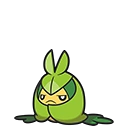
|
Leavanny 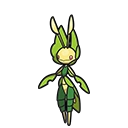
| |
Type: Null 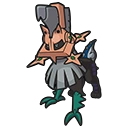
|
Silvally 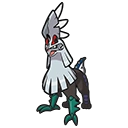
| |
Eevee 
|
at Day | Espeon 
|
Budew 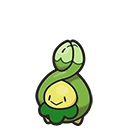
|
Roselia 
| |
Riolu 
|
Lucario 
| |
| Eevee
|
at Night | Umbreon 
|
Chingling 
|
Chimecho 
|
Appearances
Core series
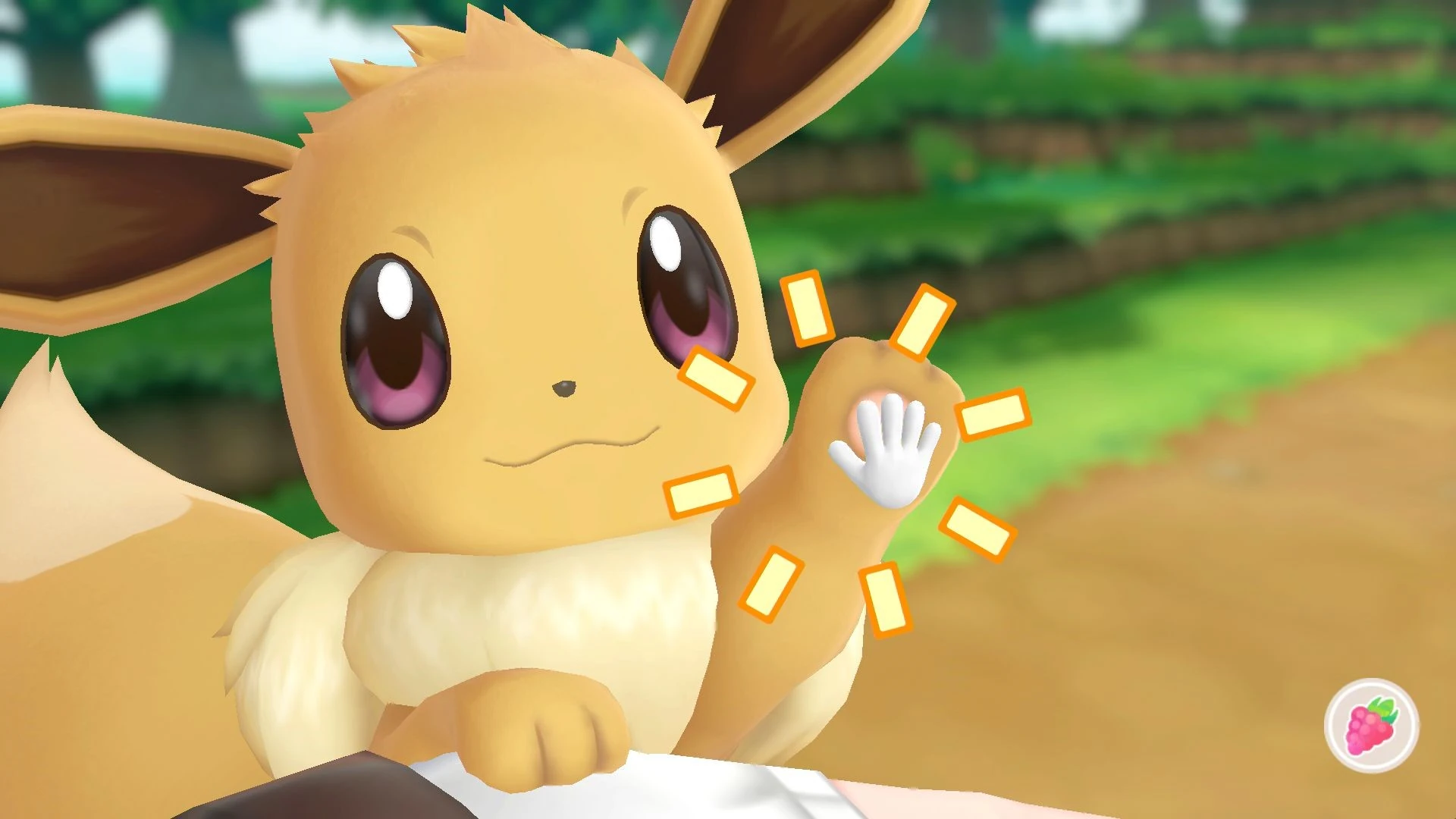
Gameplay screenshot of Pokémon: Let's Go, Eevee!, where the player can interact with the Partner Eevee, the game's version mascot and first partner Pokémon, to increase friendship and make it grow to love him/her
The friendship mechanic is introduced in Generation I, specifically in Pokémon Yellow Version: Special Pikachu Edition. In this installment for the Game Boy (or Game Boy Color, internationally), where walking Pokémon also makes its first appearance, Pikachu, the first partner Pokémon, can be interacted whenever the player turns around to talk to it. Pikachu will grow to love the player by gradual walking, winning battles frequently, or healing, but if the Pokémon faints frequently or is sent to the PC, the friendship will decrease. Unlike later games, the friendship with Pikachu does not have any effect in battles. Starting in Generation II, friendship applies to all Pokémon, though they can only be determined by talking to a Trainer who can rate the level of friendship of the first in their party, as it is not explicitly shown otherwise. Friendship can determine the power of Return or Frustration. If the Pokémon's friendship is high, it likes its Trainer and the power of Return increases while the power of Frustration decreases. If the Pokémon's friendship is low, it dislikes its Trainer and the power Frustration increases, while the power of Return decreases. Therefore, when in the highest or lowest friendship level, these moves become quite effective, but if the player chooses the incorrect move (using Frustration while at max friendship or vice versa), they will inflict virtually no damage at all even against a very low-leveled Pokémon.
In Pokémon HeartGold Version and Pokémon SoulSilver Version, the aspect of friendship can be viewed by interacting with the Pokémon in front of the party. When friendship is high, Pokémon can show signs of affection towards their respective trainers. Some of these signs can be strong. Capturing a Pokémon with a Luxury Ball, attaching a Soothe Bell to the Pokémon, or giving it Berries that augment Stats are also ways to increase friendship with Pokémon. However, allowing the Pokémon to faint in battle and letting it get injured frequently will decrease its Friendship to the trainer, making the Return attack weaker, but making Frustration stronger, as in the previous Generations.
Friendship can also help certain Pokémon evolve, such as Togepi into Togetic, Golbat into Crobat, or Eevee into three of its evolved forms Espeon, Umbreon or Sylveon. Many Baby Pokémon evolve into their base Pokémon though Friendship. Additionally, in Pokémon Diamond Version and Pokémon Pearl Version and Pokémon Platinum Version, one can check their Pokémon's friendship level with a Pokétch app.
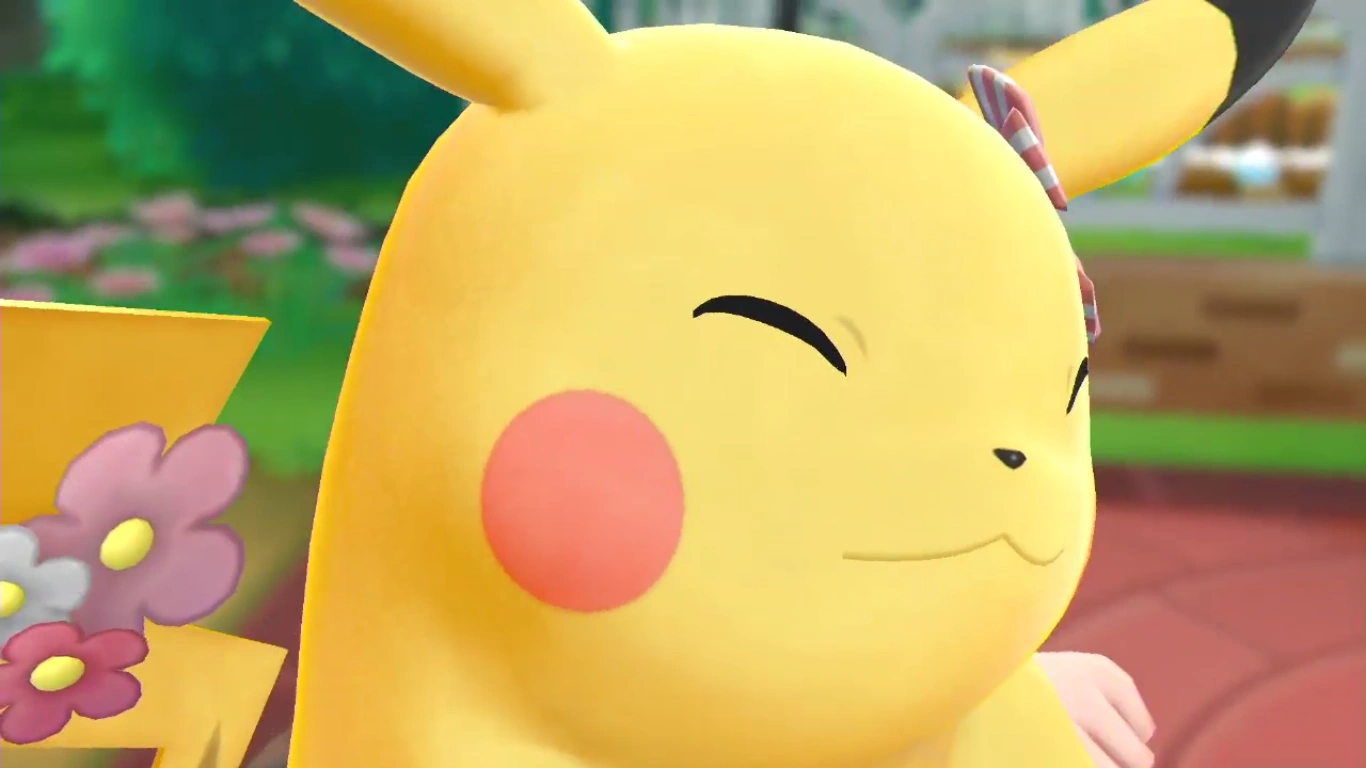
Partner Pikachu from Pokémon: Let's Go, Pikachu! with maximum friendship and giving affection to the player
Friendship can also help certain Pokémon with their special moves. In Pokémon: Let's Go, Pikachu! and Pokémon: Let's Go, Eevee!, where the mechanic is in much greater focus than in most games, both Partner Pikachu and Eevee require a high level of friendship in order to activate their unique Special Moves: Pika Papow and Veevee Volley, which functions similarly to Return. In addition, exclusively, when high enough, they can be seen giving direct affection to the player by cheerfully rubbing on their face when interacted with, similar to in the anime series. If friendship is particularly low, however, the Partner Pokémon can sometimes be seen visibly unhappy.
A Pokémon's friendship value ranges from 0 to 255 (stored as a single unsigned byte), and since Generation III, each Pokémon has a base friendship value (often 70). This base value applies when a wild Pokémon is caught with most kinds of Poké Balls and in most cases when a Pokémon is traded. As of Generation IX, there are two exceptions for caught or traded Pokémon:
- A wild Pokémon caught in a Friend Ball starts with 200 friendship, regardless of its base friendship, making it useful for Pokémon that evolve based on the mechanic.
- A Pokémon traded back to its original Trainer regains the friendship it had before being traded away (Generation VI or later).
Additionally, a Pokémon hatched from an Egg starts with 100 friendship (Pokémon Brilliant Diamond and Pokémon Shining Pearl)/120 friendship.
Pokemon that evolve from friendship requires its value to reach 220 in Generations II to VII, while Generation VIII onwards requires only 160.
Walking every 255 steps increases the friendship of all Pokémon in the party by 1 if under 100, or 2 if over 100.
From Generation III onward, if a Pokémon was caught in a Luxury Ball, any increase to its friendship is boosted by 1.
Activities and events that increase a Pokémon friendship are more effective in the exact location where that Pokémon was first caught, known as Met Location. This effect exists in Pokémon Crystal Version, Generation III, and all games from Generation V onward.
In Crystal, a Pokémon leveled up at its met location will gain twice as much friendship. However, only Pokémon caught in this Generation II installment record a met location, and Pokémon traded to a Generation I game have this data permanently erased. Therefore, caution should be exercised. In Generation III onward (except in Generation IV), if a Pokémon is currently at its met location, any increase to its friendship is boosted by 1. This does not apply in Pokémon XD: Gale of Darkness.
If a Pokémon is holding a Soothe Bell, increases to its friendship are boosted by 50% of the change. In Generation III, the increase is applied to the original change in friendship; in subsequent generations, it applies to the friendship change after including Luxury Ball and met location bonuses.
Certain factors do not increase or decrease friendship:
- Healing a Pokémon with low HP or with a status condition
- Using a Pokémon in battle and/or winning a battle with it
- Trying to release the partner Pikachu or evolve it with a Thunder Stone (Pokémon Yellow Version: Special Pikachu Edition)
- Depositing a Pokémon in the Pokémon Storage System (except for Pokémon Yellow, and the Stadium games, where friendship is lost in the former and resets entirely in the latter)
- Letting a Pokémon's HP fall to critical status
- Giving a Pokémon an item to hold that is not the Soothe Bell
- Increasing affection
- Using a Scent on a Pokémon
- Battling against an Elite Four member or the Pokémon Champion (Pokémon Yellow )
- Letting a Pokémon get a status condition, or walking with a Pokémon in such condition
- Evolving a Pokémon without trading it
Anime
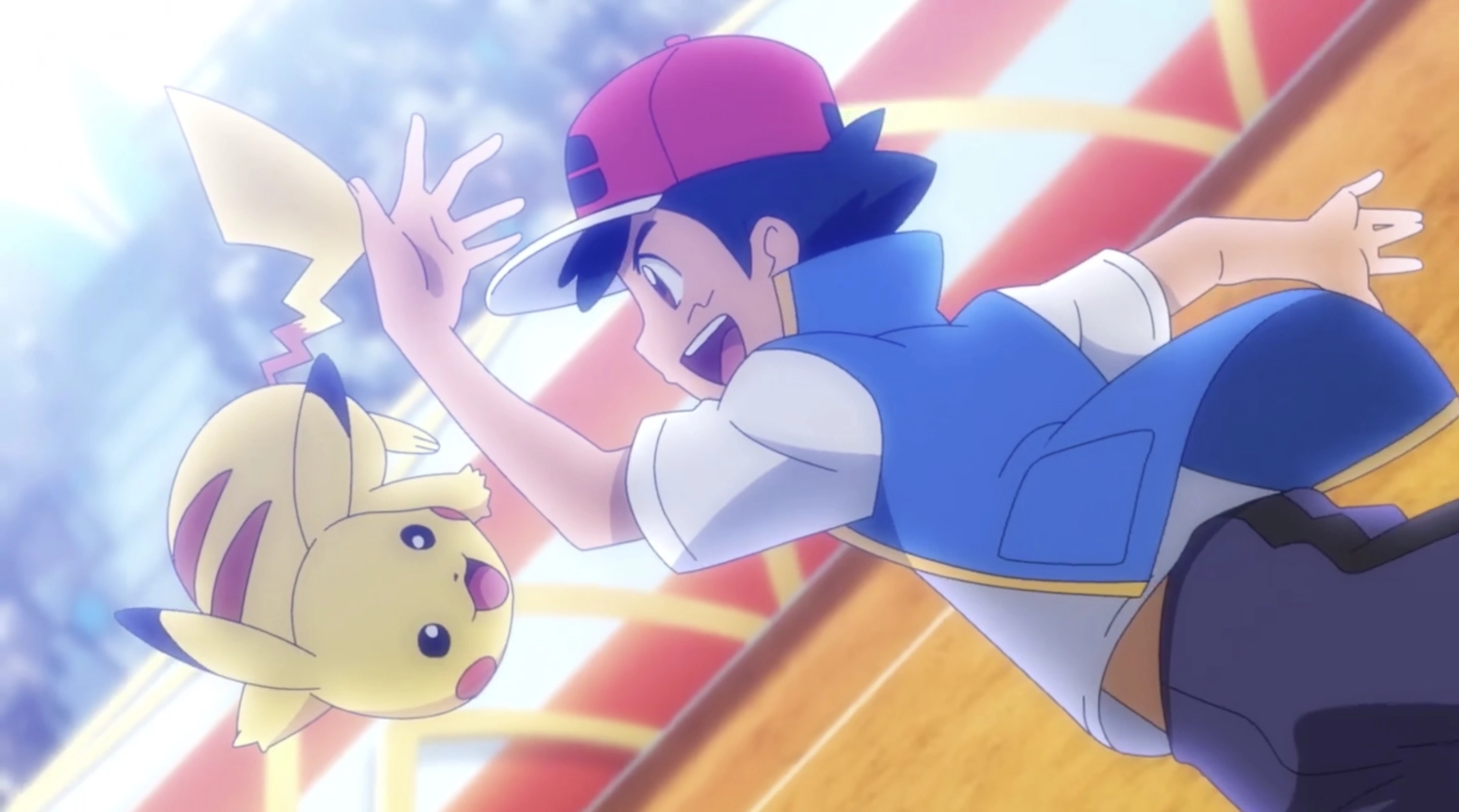
The friendship of Ash Ketchum and his Pikachu, a prominent theme of the series
Similarly to the main games, in Pokémon the Series, it is said that Pokémon who have friendly relations with their Trainers perform better in battles. Ash Ketchum believes that friendship with Pokémon will make him stronger and almost invincible. This is explicitly seen with his Pikachu, which they have been virtually inseparable throughout every chapter and season.
However, some Trainers, such as Paul and Cross, have been shown to focus on raw strength alone, disregarding their Pokémon's feelings and well being over the course of the series. In those cases, often the Pokémon grow to dislike them. Most Trainers from villainous teams are also known to have some Pokémon disliking them.
In the case of Greninja, his bond with Ash was so strong that he is able to use the power of Bond Phenomenon to activate Ash-Greninja mode, which may be able to surpass even Mega Evolution.
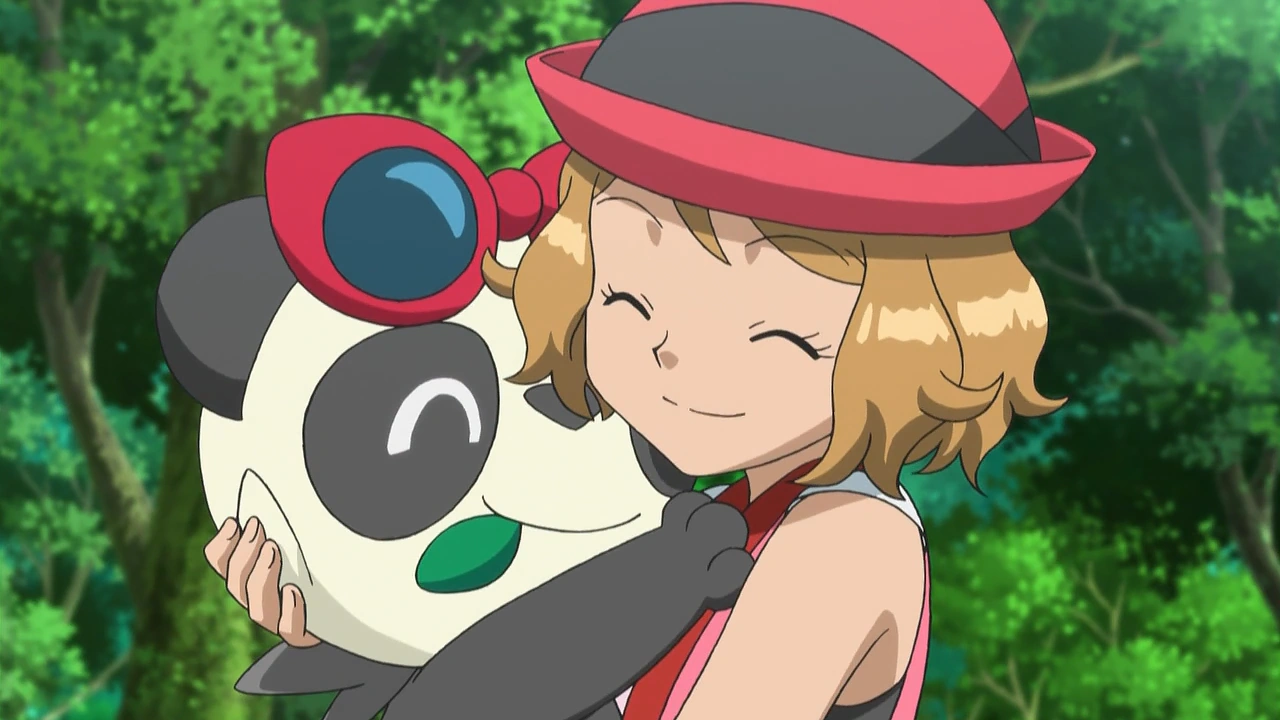
Serena and her Pancham hugging each other
Throughout various episodes, usually after evolving, achieving a big accomplishment such as winning tournaments, or, defeating Team Rocket, many Trainers can be seen sharing affection with their Pokémon, sometimes Gym Leaders, the Elite Four, or even Pokémon Champions. Sometimes, Pokémon can be seen making strong friendships with other species.
Trivia
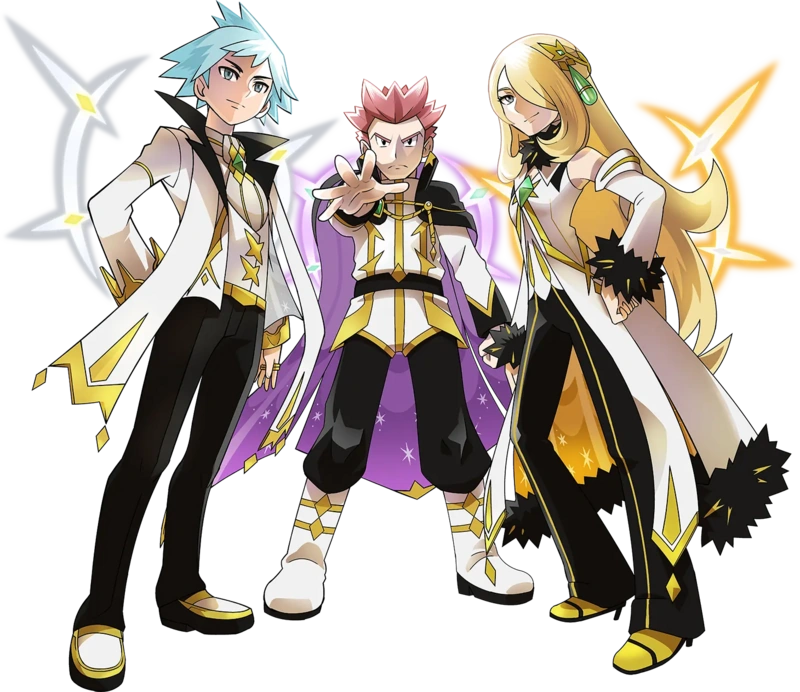
Steven, Lance, and Cynthia each wearing Arc Suits, a sign of achieving extreme bondage with their Partner Pokémon
- In all core series games from Generation III to Generation VII, every non-playable Trainer's Pokémon that knows Frustration or is in Pokémon Emerald Version's Battle Factory has 0 friendship, and all other NPCs' Pokémon in those specific generations have maximum 255 friendship, making their use of this move and Return effective.
- Although friendship in general plays an important role in Pokémon and is recommended for players to bond with the titular creatures, in the core series, it is not required to complete the games.
- Contrary to popular belief, a Pokemon with 0 friendship does not explicitly hate the player character (or Trainer, when shown in the animated series). In spite of feeling neglected, they still obey commands and follow their Trainers, and in some media, are willing to forgive them if they begin to show affection or turn from bad ways.
- In Pokémon Yellow Version: Special Pikachu Edition, a glitch exists in which whenever Pikachu has full HP and the player repeatedly uses healing items, although the game says the message it won't make an effect, Pikachu's friendship increases, providing an easy way for it to like the player character.
- A Pokémon does not necessarily have to be caught in order to have a relationship with a Trainer. Various cases in the franchise exist of people befriending wild Pokémon if said Trainer manages to get along with them well or help them from danger. Occasionally, they may even want to become a new Pokémon of their own team.
- In Pokémon Sword and Pokémon Shield, this is possible in Pokémon Camp when the player cooks curry in most areas that have wild encounters, where there is a chance they may appear and request to join them without a battle, including Shiny Pokémon, as long as they have at least one Poké Ball, Great Ball, or Ultra Ball in their Bag.
- Hey You, Pikachu! and Pokémon Channel features a wild Pikachu based on Ash's Pikachu becoming close friends with the player character throughout the games' plot. In the latter, other wild Pokémon can occasionally visit their house, even Legendaries and Mythicals (though only a few do so).
- According to Professor Oak, in Generations I and II, the close friendship between a Trainer and their Pokémon plays an integral role for them to become the Pokémon Champion or at least a strong user in battle.
- The instruction manual for Pokémon Gold Version and Pokémon Silver Version erroneously claims that happiness could be decreased by storing the Pokémon in the PC, and increased by just using any beneficial item on it. These are actually relics from Pikachu's happiness system in Pokémon Yellow and have no effect whatsoever on happiness in those games.
Gallery


